
Australian skipper questions, answered
Straight answers to common questions about boat licences, sailing courses, commercial qualifications, charter readiness and passage planning.
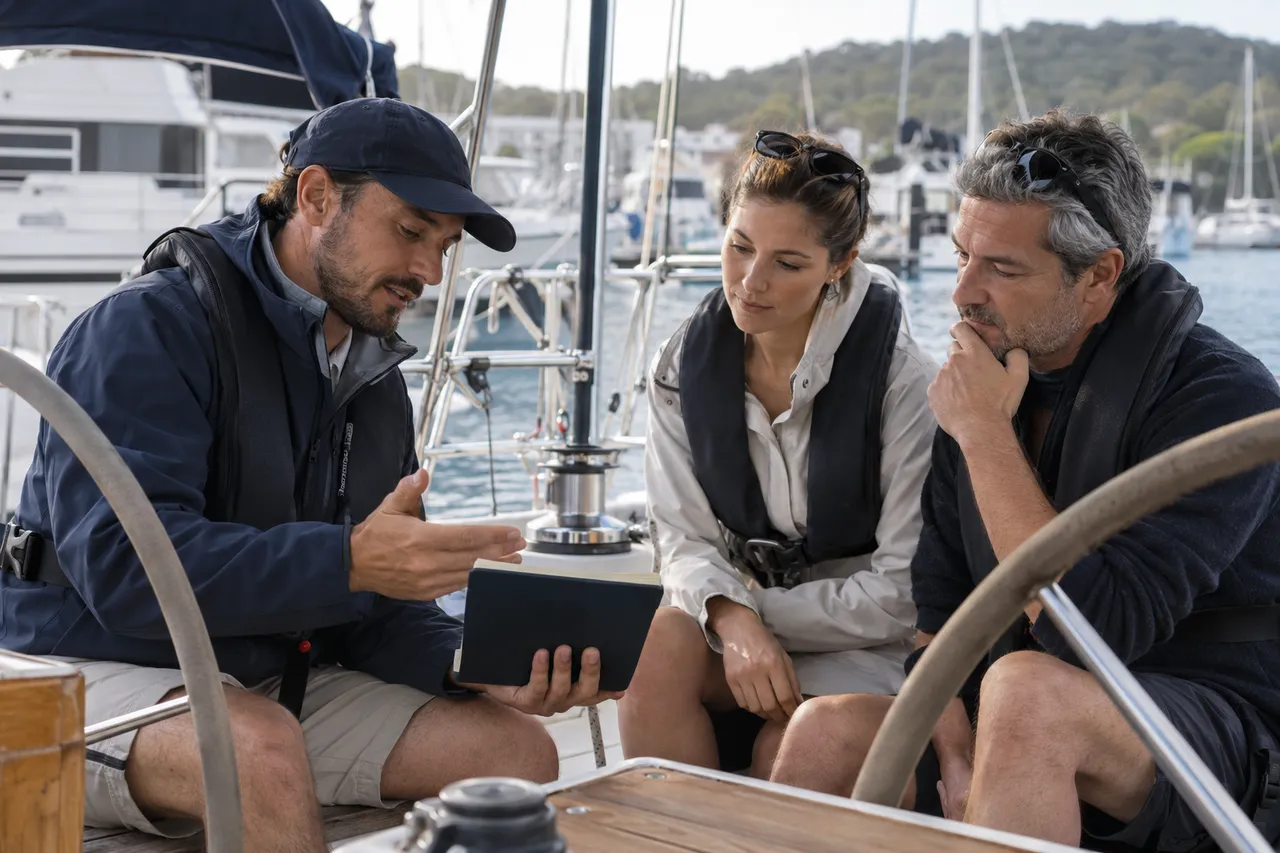
Start here for orientation, then follow the linked chapter, guide and official source. Requirements depend on your vessel, waters and intended activity.
Licences and foundations
What is the difference between a boat licence and a sailing qualification?
A state or territory boat licence is a legal permission that may be required for particular recreational operations. A sailing qualification records training or assessment under its own scheme. Check what the law and the organisation relying on the certificate each require.
Do I need a boat licence in every Australian state?
Rules differ by state and territory and may depend on vessel type, engine power, speed, age or operating area. Check the authority for the waters where you will operate.
Can an RYA certificate be used in Australia?
RYA training is widely known, but recognition depends on the purpose. A charter operator, employer, regulator or insurer may each apply different criteria. Ask the decision-maker directly.
What qualification do I need to be paid as a skipper?
Paid work on domestic commercial vessels generally sits within the AMSA national system. The correct certificate depends on vessel, role, area and operation; current prerequisites can include training, medical fitness and sea service.
Is a Coxswain certificate the same as a recreational boat licence?
No. An AMSA Coxswain certificate is a commercial maritime qualification with defined privileges and conditions. A recreational licence is issued under state or territory rules.
How do I know which training course is right for me?
Define the vessel, waters, purpose and whether the work is paid. Then confirm both the legal requirement and how the intended operator, employer or charter company recognises the course.
How much experience should I have before a bareboat charter?
There is no single number. Operators assess relevance and recency: comparable vessel handling, anchoring, reefing, navigation, crew management and experience in similar conditions.
What should a passage plan include?
Route, hazards, official chart information, weather, tide, vessel and crew limits, communications, alternatives, decision points and a method for monitoring actual progress.
Can I rely on a chartplotter or boating app?
Use electronic navigation as one input. Keep a lookout, understand chart limitations, cross-check position and depth and carry the current information and backup appropriate to the voyage.
Where should I get marine weather information?
Use the Bureau of Meteorology marine forecasts, warnings and observations for the relevant area. Local knowledge can add context but does not replace the official forecast.
How should I record sea time?
Record the vessel, dates, route or operating area, duration, distance where relevant, your role, tasks, conditions and a person who can verify the entry. Follow the current evidence rules for any formal certificate.
Is this website an official training provider or regulator?
No. It is an independent educational guide powered by YouSail.com.au. It does not issue certificates or official rulings and its advice can be wrong or outdated.
How current is the course?
Selected lessons and explanations were updated in October 2026. The site does not claim a completed expert review of the whole library. See the editorial policy and corrections record, and recheck current official requirements before acting.
What should I do if I find an error?
Use the contact form with the page, statement and a current primary source where possible. Corrections improve the guide, but a response from the site is not official advice.
Choosing and booking training
Can I start sailing without buying a boat?
Yes—you can investigate school tuition, club introductions and supervised sailing opportunities without first committing to ownership. Ask what access is included and what practice is available afterwards. Compare the complete cost, location and regularity of access, not just the introductory session.
Should I book private or group sailing lessons?
Private tuition can focus on your particular gaps, while a group course can offer practice in different crew roles. Neither format is automatically better. Ask how many learners share the instructor, how active roles rotate and how the proposed format addresses your experience and goals.
What should I tell a sailing school before booking?
Describe your recent sailing, boat types, tasks performed and any help you needed. Explain your intended waters and whether your goal is recreation, charter or paid work. Mention access needs early. Ask the school to recommend a specific next step and explain why it fits.
How do I compare a short course with a fast-track package?
List each included component and its prerequisites. A longer package may include beginner training and theory that a short practical course assumes you already have. Compare tuition, preparation, assessments and accommodation separately before comparing the final price.
What happens if bad weather affects my sailing course?
Ask the provider before booking. Get its policy for postponed sessions, changed locations, substitute shore-based learning and refunds in writing. Also check your travel and accommodation cancellation terms. Do not assume that a course running to schedule means all advertised practical activity can take place.
What extra costs should I ask about?
Check materials, equipment loan, assessments, certificates, application fees, meals, accommodation, membership and travel. Ask about reassessment or extra tuition if needed. Record whether each item is included, excluded or unknown; an unanswered question is not a zero-cost item.
Charter and crew preparation
Is passing a course the same as being ready to charter?
No. The course, your recent experience and the proposed charter may involve different boats or conditions. Give the actual operator an honest experience summary and ask about documents, checkout and familiarisation. Keep its written acceptance with the booking rather than relying on a general claim about a certificate.
What belongs in a sailing experience summary?
Record recent vessel types and sizes, dates, operating areas and the tasks you actually performed. Distinguish observing, assisting and taking responsibility. Describe the experience of the wider crew as well. The purpose is to help an instructor or operator identify gaps, not to make the record look impressive.
Should my partner or crew also take lessons?
Discuss the intended roles and existing experience with an instructor. A plan that depends on one person for every important task is worth questioning. Ask what the other crew should learn and practise, and how to build shared understanding without pretending everyone has the same competence.
Can I use AI-generated pictures on this site for navigation?
No. They are conceptual editorial illustrations, not current charts, real-location photographs or approved manoeuvre diagrams. Use the responsible authorities, current navigational information and appropriate practical instruction. The artwork is there to make learning more approachable, not to approve a route.
How should I prepare questions for a charter handover?
Write down what is unfamiliar about the boat and the operator’s procedures before arrival. Ask how to obtain support, which limits apply and what the checkout will cover. Clarify anything you do not understand with the operator; do not treat a generic online checklist as the complete handover.
What if the boat offered differs from the one I trained on?
Tell the operator or instructor exactly what has changed, such as boat type, handling arrangement or size. Ask what familiarisation and supervised practice are appropriate. A certificate name alone does not show readiness for an unfamiliar boat, and confidence is not a substitute for demonstrated skills.
Practice, progress and reliable information
How can I tell whether I am improving?
Choose a specific practice objective with your instructor, then record the task, the prompts you needed and the feedback received. Compare later sessions on similar tasks. A useful record shows what has changed and what still needs supervision; it is more informative than simply counting course days.
What should I write after a sailing lesson?
Note one task you practised, one decision you discussed, one piece of feedback and one next action. Separate what you did independently from what the instructor guided. Keep the entry short enough to complete consistently while the experience is fresh.
Is the downloadable learning log accepted as official sea-service evidence?
It is a personal planning worksheet, not an approved sea-service form. Ask the organisation assessing your experience which format, details and verification it accepts. Keep formal evidence separately and check a sample entry early rather than finding out after a season that your records are unsuitable.
What should I do after a long break from sailing?
Describe your previous and recent experience honestly to an instructor or operator. Ask for a refresher plan matched to the actual boat and intended activity. Start with appropriate supervision rather than assuming an old certificate demonstrates current readiness for the proposed trip.
How do I check conflicting advice online?
Identify which organisation is responsible for the question. Licensing, certificate issuance, school delivery and charter acceptance may have different decision-makers. Give that organisation the exact circumstances and ask for current written guidance. Do not choose an answer only because it is convenient or repeated on several websites.
Are these school listings a ranking of the best providers?
No. They are YouSail-published directory records with enquiry guidance. Geographic links indicate location, not equivalent courses or quality scores. Confirm current programme details and recognition directly. A listing, illustration or position on the page is not an endorsement or a guarantee of available places.