
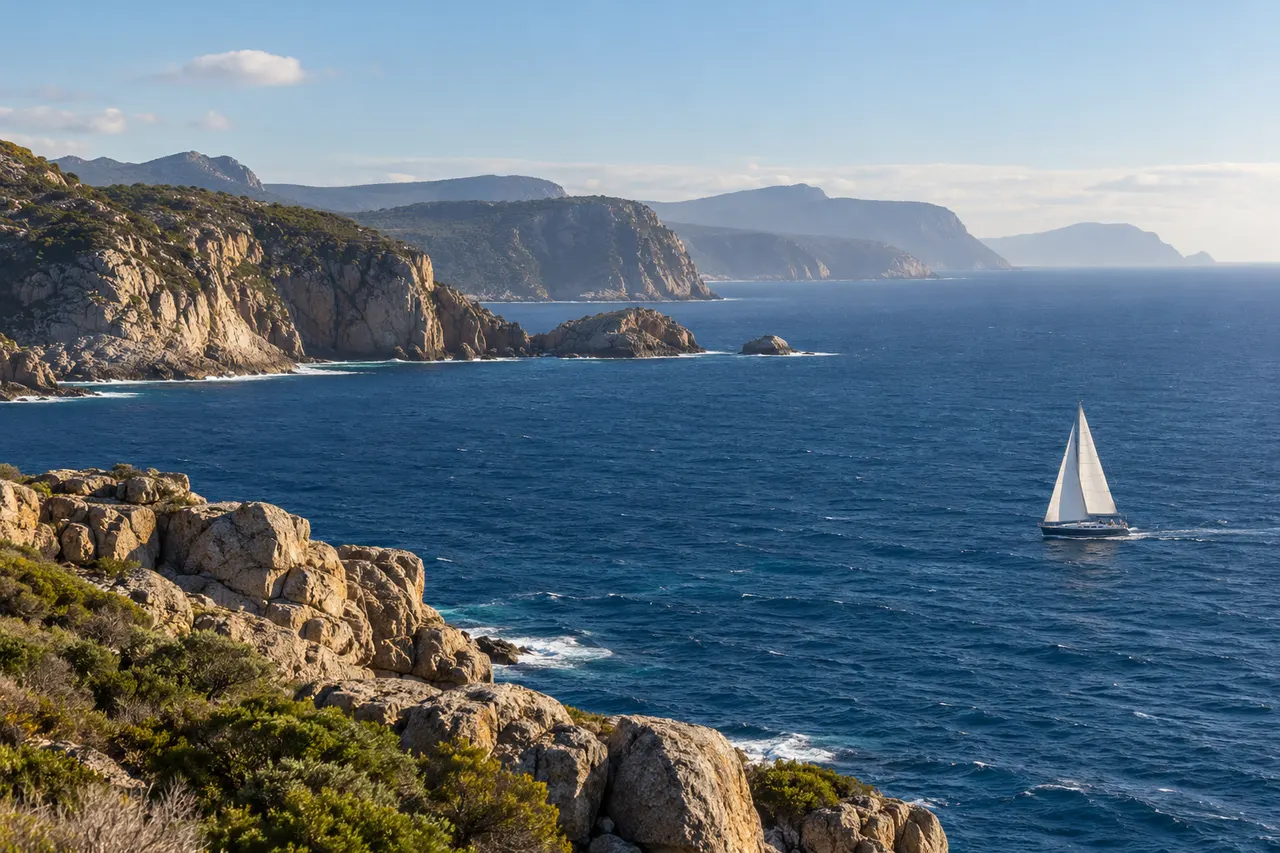
The quick answer

Tasmanian boating can move quickly from sheltered to exposed. Cold water, strong weather systems and limited refuge make preparation and early decisions critical.
- Who it suits
- Skippers researching Tasmania
- Before you start
- Bring your vessel, crew and route details to the planning discussion
- Time to allow
- Recheck charts, notices, forecast and local restrictions for the actual trip
- Budget beyond tuition
- Current navigation information, suitable training and flexible travel
- Your next step
- Use the linked Tasmania authorities before making operational decisions
- Before relying on advice
- Check the current official source. Reading a guide does not certify practical competence or grant permission to operate.
Expanded 5 October 2026 · SkipperCourse editorial team · Illustrative exercises, not operational instructions.
Plan for cold-water consequences
Cold water shortens the time available for self-rescue and increases the consequence of a person-overboard event. Wear suitable lifejackets and clothing, prevent falls and practise a recovery method appropriate to the vessel.
Keep the cockpit organised, move deliberately and brief crew before exposure or darkness increases. Prevention is the primary control.
Watch the whole weather picture
Check Tasmanian marine forecasts, warnings, observations and synoptic situation. Terrain can channel or shelter wind locally while more exposed water experiences very different conditions.
Set decision points before capes, channels and long open legs. Update the plan when timing changes, because the later forecast period may no longer match the original window.
Choose refuge that works
Identify shelter for the forecast direction and swell, plus a second option if the first is unavailable. Consider daylight, depth, holding and the safety of the approach.
For remote or exposed routes, match communications, spares and crew experience to the recovery time likely in that area. Build experience through shorter, well-debriefed trips.
Plan the crew’s exposure as carefully as the route
A crew member who becomes cold, tired or seasick may be less able to help with the final approach. Think beyond whether everyone owns a waterproof jacket: discuss the clothing, suitable lifejackets, protected rest opportunities and tasks required on the actual boat. Ask the instructor or skipper how the crew will move around and communicate as conditions change.
MAST’s cold-water guidance emphasises preparation and the consequences of immersion. Do not use a generic survival-time estimate to justify exposure. The practical preparation is preventing a fall, having suitable equipment and learning the recovery arrangements for the actual vessel through appropriate instruction. This guide is not medical advice or an emergency procedure.
Build progression around distinct operating environments
A sheltered session near Hobart, a longer passage through nearby waterways and an exposed coastal trip have different preparation needs. Ask a provider where the planned course operates and what changes when weather prevents the intended programme. If you want experience relevant to your own cruising plans, describe the boat and likely route rather than simply requesting “advanced sailing”.
Use shorter trips to establish how the crew handles preparation, watchkeeping where relevant, meals, rest and arrival. Keep a record of the tasks each person actually performed. Extending the distance before these routines work can increase fatigue without producing better learning. A well-debriefed local session can be the right next step even for someone with many years of occasional sailing.
Worked scenario: a destination stops being a useful refuge
Illustrative example: the forecast changes and the intended stop no longer provides the conditions you planned for. Do not keep calling it the backup simply because it is close. Reassess shelter, the approach, depth, availability and the time needed to reach a suitable alternative. A place can remain on the chart while no longer serving the purpose assigned to it in your plan.
Discuss the decision before the crew is exhausted. Check whether the changed route introduces a different exposed leg or a later arrival, and tell the shore contact through the agreed arrangement. In a training setting, ask the instructor to walk through the reasoning. The lesson is how to recognise the changed assumption early, not to memorise a universal list of Tasmanian refuges.
Keep the decision ahead of the destination
Check
Current information, actual boat and crew capability.
Compare
Do conditions still match the plan’s assumptions?
Decide
Continue, change or postpone before options narrow.
Update
Brief the crew and communicate the revised plan.
Conceptual learning aid. Follow current official guidance and appropriate practical instruction.
Put the guide into practice
Use this worksheet to organise a discussion with your instructor or operator. Complete it for the actual boat and intended activity; it does not approve a trip.
| Question | What to prepare |
|---|---|
| Crew exposure | Suitable clothing and equipment, realistic task allocation and opportunities to rest on this boat. |
| Training progression | Recent experience in sheltered and exposed conditions, with clear gaps to discuss with an instructor. |
| Refuge assumptions | Why a place is suitable for this forecast and what change would make it unsuitable. |
| Reassessment | A review point before increasing exposure, with time to carry out the conservative alternative. |
Working checklist
- Dress for water temperature and prevent falls
- Check forecast, warnings and observations
- Set decision points before exposed legs
- Choose direction-appropriate refuge
- Match communications to remoteness
Questions skippers ask
Why does cold water change the plan?
It increases the consequence of immersion and can reduce a person’s ability to self-rescue, making prevention and rapid recovery especially important.
Is a sheltered forecast area enough?
No. Local terrain and nearby exposed waters can differ. Use the forecast for the actual route and monitor observations.
Is warm air a reason to relax cold-water preparation?
No. Prepare for the water and the consequences of immersion, not just how comfortable the air feels ashore. Follow current MAST guidance and obtain practical instruction in the recovery arrangements for the vessel.
Should my first Tasmanian course be a long passage?
Start with the skills and environment you need to learn. Ask the provider how it assesses your experience and manages weather alternatives. A shorter course with more active practice may address your gaps better than distance alone.
Primary sources to check
Open these sources again when planning; linked requirements and conditions may have changed since this guide was reviewed.
Marine and Safety Tasmania↗BOM Tasmania marine↗MAST: cold-water preparation and safe boating↗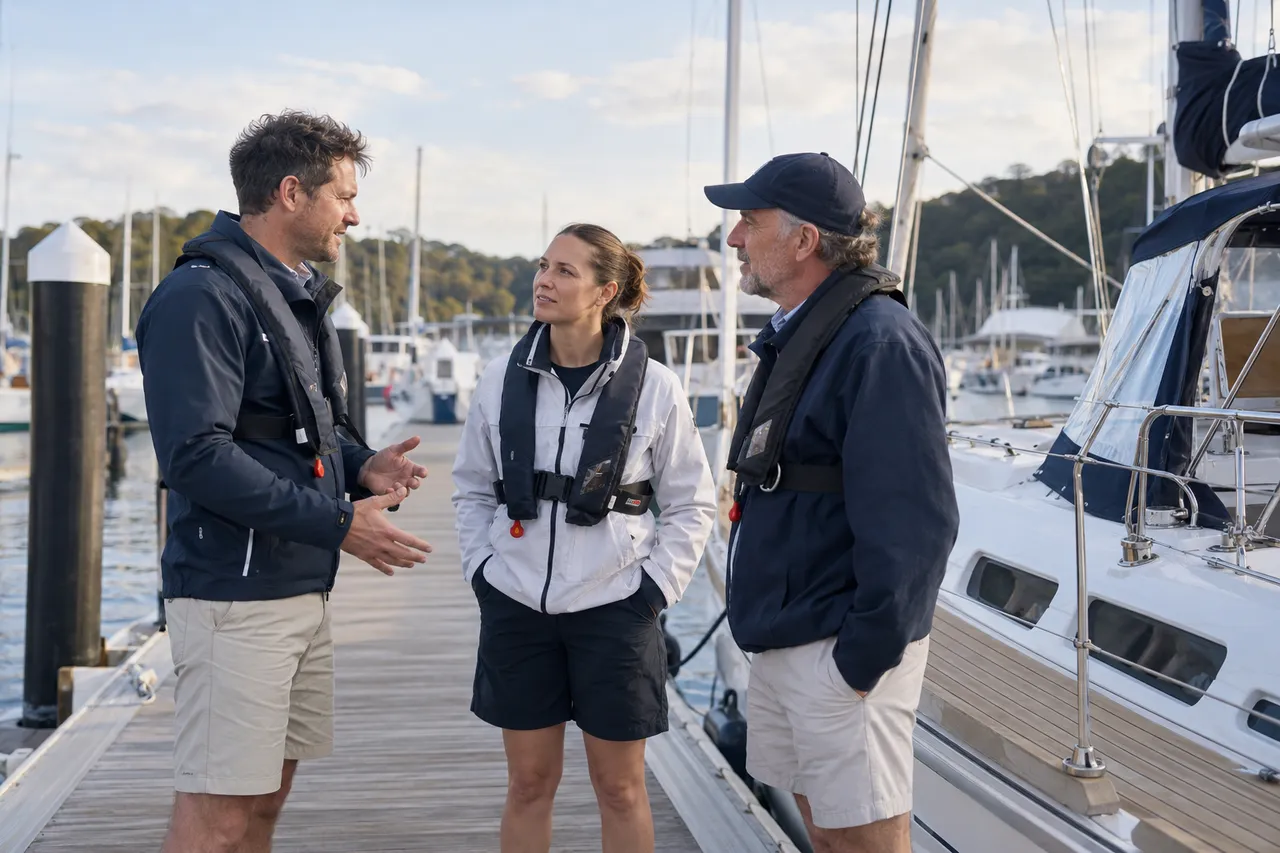
Schools to investigate for your next step
YouSail-published school records, mirrored from SailingSchools. Source snapshot: 5 October 2026. Listings are not endorsements or confirmation of current courses, accreditation or available places.
This topic does not establish a specific provider match. Use the directory to shortlist by location, then confirm the exact instruction directly.
Matching records are alphabetical, not ranked.
Explore all published school records →Questions to take to your shortlist
Send the same questions to each provider and compare specific written answers.
- Your actual goal
- Which exact course fits my vessel, experience and intended use? Who should confirm its acceptance?
- Time at the controls
- How many students share the boat and instructor? How do you rotate practical roles?
- What the timetable includes
- How much time is active instruction or practice, excluding transfers, breaks and administration?
- The complete price
- Are materials, equipment, membership, assessment, certificates, meals and accommodation included?
- Changes and cancellation
- What happens if weather, illness, instructor availability or the training boat changes the plan?
- After the course
- What should I practise next, and where can I get suitable supervised experience?