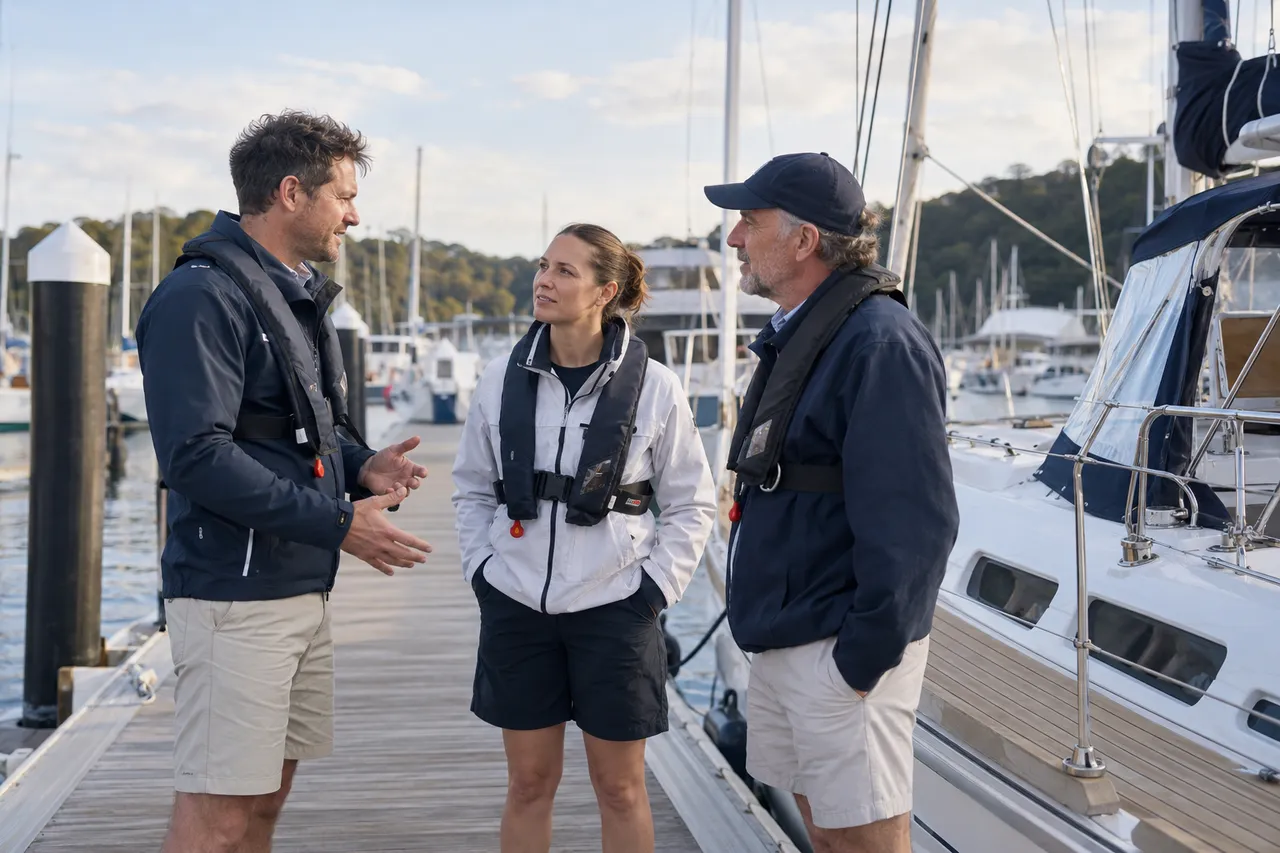


The training boat is part of the course, not just transport to the classroom. Choose it by the tasks you need to learn and the boat you expect to use afterward. Hull labels alone do not establish stability, offshore suitability or ease of handling. Individual design, equipment, condition, loading, operating limits and instruction all matter.
Small powered boats: make the practical scope explicit
A small-boat lesson may focus on preparation, launching, handling, coming alongside and recovery. Ask which of those tasks you will actually practise and how much active time each learner receives. A practical licensing assessment and a broader handling course may have different purposes; confirm what the booking contains rather than assuming one automatically includes the other.
Do not select a boat for bar work or exposed conditions merely because it is a RIB, centre console or another familiar type. Suitability needs an assessment of the actual vessel, operator, crew and conditions. If your future use involves a particular hazard, discuss the progression with a qualified instructor instead of seeking a boat type that supposedly removes the risk.
Dinghies and keelboats: compare learning tasks
Dinghy and keelboat programmes can both introduce sailing, but the practical arrangements and learner roles differ. Ask how the provider teaches sail handling, steering, communication and preparation on its actual fleet. Consider the physical tasks, how the session is supported and what opportunities you will have to practise after the course.
A keelboat course does not necessarily include overnight accommodation, offshore sailing or multi-day passage management. Read the stated programme. If those experiences matter, ask explicitly which are included and which belong to another course. A boat capable of an activity does not establish that the activity will be taught during your booking.
Monohulls, multihulls and larger powered vessels
When moving to a different platform, identify the systems and handling you need explained: propulsion, steering, visibility, ground tackle, sail controls where fitted, and the location of essential equipment. Ask for instruction on the actual boat rather than assuming a generic rule about one or two engines will transfer without adjustment.
For a charter, tell the operator what you have used recently and where the new vessel differs. Ask whether additional familiarisation or a supported checkout is appropriate. Do not infer limits from the boat’s apparent comfort or the absence of a familiar sensation such as heel. Follow the operator’s and manufacturer’s guidance for the actual vessel and obtain the required practical instruction.
Worked exercise: moving from the school boat to your own boat
Illustrative example: a learner completes a course on one yacht, then buys a different yacht. Before planning a celebratory passage, the learner prepares a differences list with an instructor: controls, handling, instruments, sails, safety equipment and anchoring arrangements. The first session is designed around familiarisation, not mileage. The certificate records completed training; it does not erase the need to learn the new boat.
Repeat the same exercise when crew arrangements change. A task that worked with an instructor and several students may need different preparation with two people aboard. Discuss task allocation and workload before moving. Reducing crew numbers should prompt a new plan, not an assumption that everyone can simply work faster.
Questions before choosing a training platform
- Which boat will be used, and can it change before the course?
- How many learners share the boat, and how are practical roles rotated?
- Which tasks, waters and overnight experiences are actually included?
- What additional familiarisation would be needed for my intended boat?
Compare answers with the objective you wrote in the pathway chapter. If you do not yet know which boat you will use, prioritise sound foundational instruction and opportunities for supervised practice. You can then make a more informed decision about specialised training.